My Reading Stack
Richard Pak
No ratings yetEducationAges 4+
Screenshots



About this app
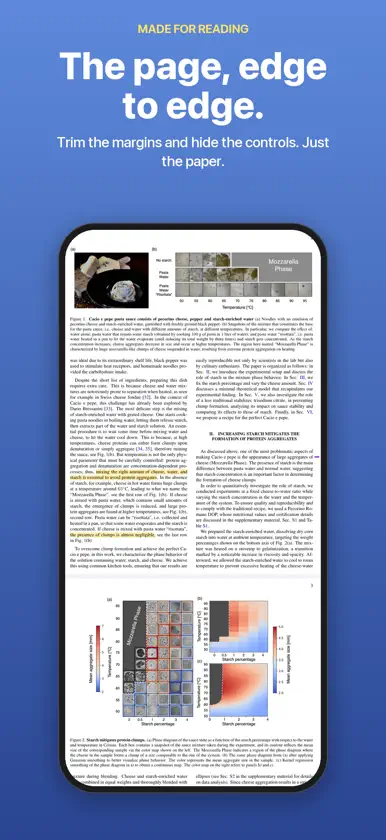
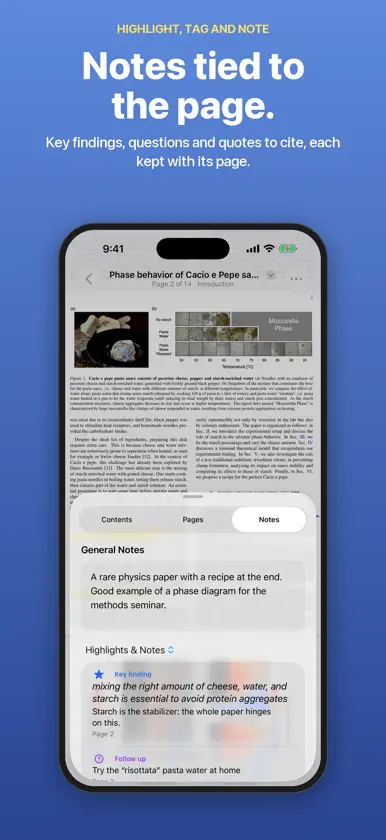
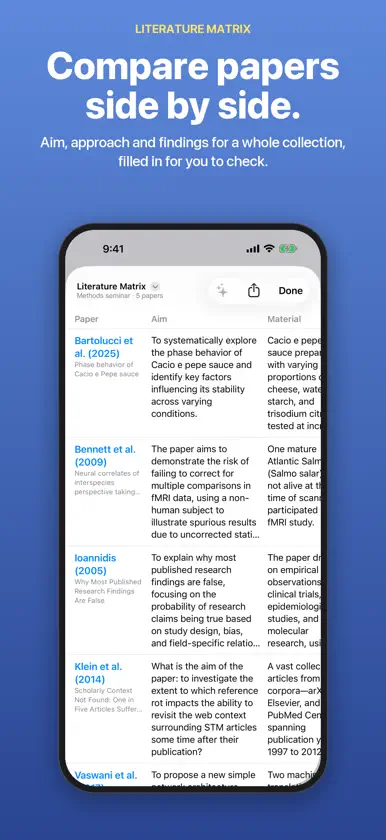
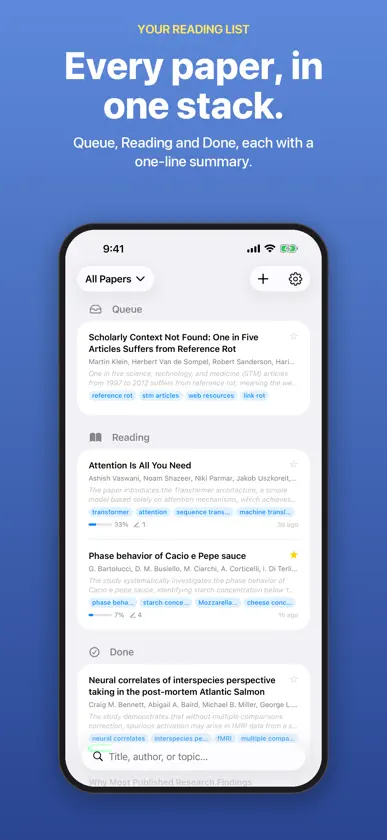
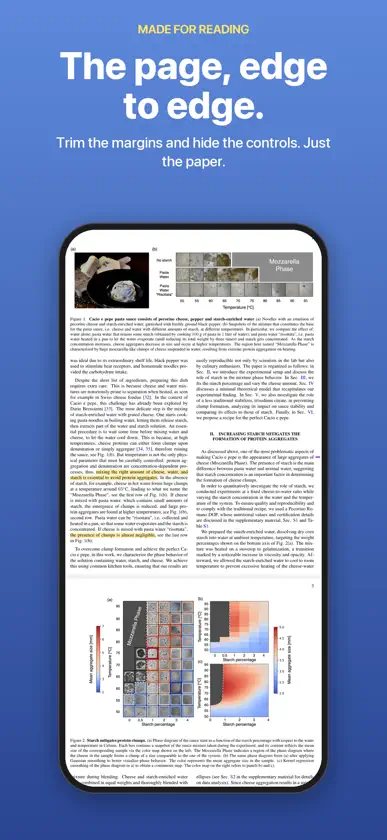
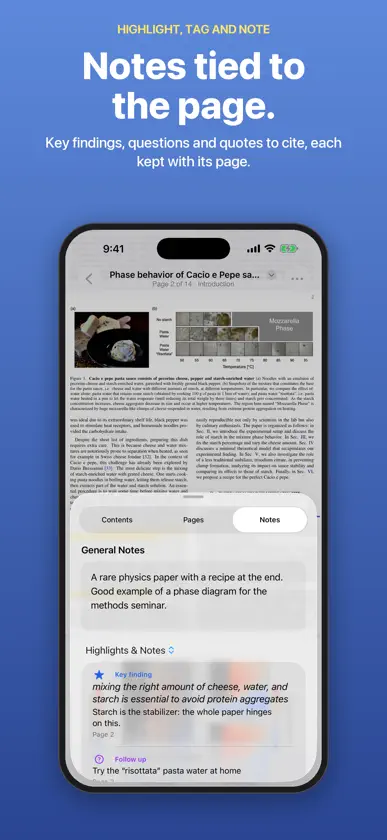
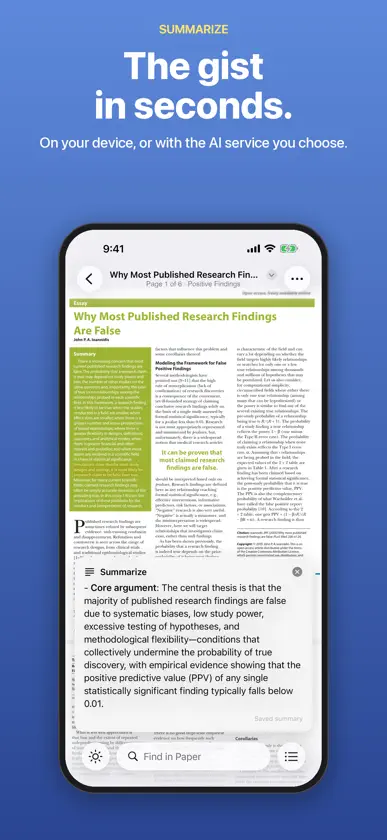
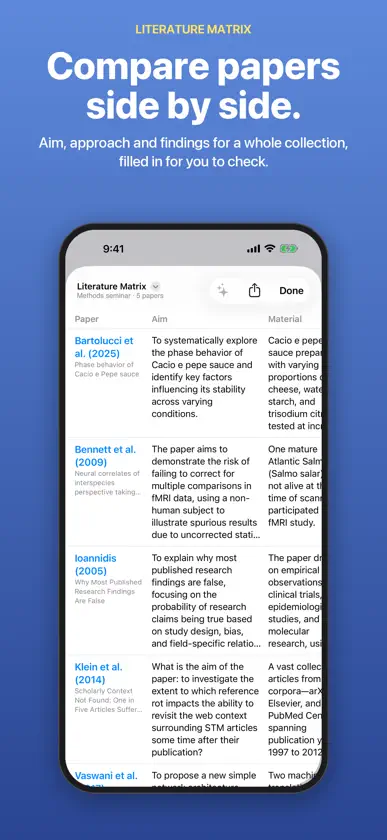
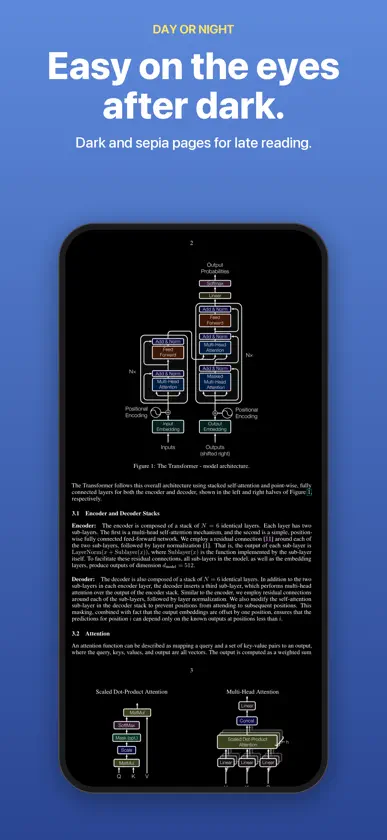
A reader for the papers you actually have to read: for a class, a lab meeting, a review or your own research. More than a plain PDF viewer, less work than a reference manager. READ COMFORTABLY • Pages fill the screen. Trim Margins crops away blank borders so the text is bigger. • Double-tap a column to zoom into it; double-tap again to zoom back out. • Light, dark and sepia reading, and two pages side by side on a wide screen. • The title bar shows where you are: page, and the section you're in. • Jump to any section, page or note from Contents. • Find in Paper shows every match and steps through them. KEEP WHAT MATTERS • Highlight and add notes from the text selection menu. • Tag them: Key finding, Method concern, Cite this, Follow up, Disagree, Connects to. Filter your notes by tag. • Copy with citation: copied text comes with an in-text citation, like (Bartolucci et al., 2025, p. 4). • On iPad, highlight and write with Apple Pencil. • Export your notes as Markdown or text, grouped by tag, or as an annotated PDF. COMPARE PAPERS • The literature matrix puts a group of papers in one table: each paper's aim, material, approach, result and your own notes. • Fill it in with AI, then edit any cell. • Export it as CSV or copy it as a table into Numbers, Excel, Pages or Word. A LIBRARY THAT ORGANIZES ITSELF • Paper details (exact title, authors, journal, year) are looked up from the paper's DOI or arXiv ID. • On-device intelligence writes a one-line summary, finds the paper's sections and picks out its topics. • Group papers into Queue, Reading and Done, star favorites, and browse by topic. Reading progress is shown for every paper. • Search by title, author or topic, or describe what you're looking for and let on-device AI find it. ASK ABOUT A PAPER • Summarize a paper or ask questions about it with Apple Intelligence, on your device. • Or use your own AI service for deeper answers. EVERYWHERE YOU READ • Papers, highlights and notes sync through your iCloud across iPhone, iPad and Mac. • Add PDFs from Files, from the share sheet in any app, or with File ▸ Import on the Mac. • On a Mac, keep Contents open in an inspector and the literature matrix in its own window. • On iPhone Duo, an unfolded phone becomes an open book, with two pages on either side of the fold. PRIVATE BY DESIGN • No accounts, no tracking, no analytics, no servers. • Summaries, sections and topics are made on your device. • To look up paper details, only the paper's public DOI or arXiv ID is sent (to Crossref, DataCite or arXiv). You can turn this off in Settings. • Paper text is sent to Anthropic only if you add a Claude API key and use Ask Claude. My Reading Stack is free, made by one developer. If it helps your reading, there's a tip jar in Settings.
What's new
Version 2.4 · Nov 8, 2026
Choose the AI you use, and better details for papers without a DOI. • Settings ▸ AI Assistance: keep Apple Intelligence on your device, or use Claude, Gemini or an OpenAI-compatible service, including Ollama or LM Studio running on your own computer. Each comes with plain-language setup help. • Or choose None to turn AI off. Its features are hidden, and paper details still come from Crossref, arXiv and OpenAlex. • A new What AI Does and Sends page explains what stays on your device and what a cloud service is sent. • With a cloud service set up, Ask reads the whole paper, not just the opening pages. • Literature matrix: Fill In says which service it uses and how many papers it will send, explains the first time, and checks with you before sending more than 20. • Papers without a DOI or arXiv ID are looked up by title in OpenAlex. Their title, authors and journal are filled in only when the match is clear, and only the title is sent.
In-app purchases
The most popular purchases on the App Store.
- Tip jarConsumableUSD 4.99
- Tip jarConsumableUSD 2.99
- Tip jarConsumableUSD 0.99